How do you choose the right online loan?
Start with the problem you need to solve, not with the biggest amount on offer. Five questions narrow the choice down in a couple of minutes:
- How much do you really need? Borrow the exact amount of the bill, not a round number on top. Every extra rand adds interest and, above R1 000, a larger initiation fee.
- When will the money come back? If your next salary covers it, a short-term loan repaid on payday is the simplest route. If it would take two or three salaries, choose monthly instalments with a personal loan.
- What is the total to repay? Compare the rand amount in the quote, not only the interest rate. Our loan calculator gives you a first estimate.
- Who is the lender? A credit provider shows its NCR registration number. Century (CreditZA) and Jabulani Money publish theirs on their websites.
- Do you meet the requirements? Most providers ask for an SA ID, a bank account in your name and proof of income, such as bank statements.
With those answers, the cards above sort themselves: a small amount until payday points to Century or Jabulani Money; three months of instalments points to Creditgenius; a larger amount over a year points to Creditomax or FinPug.
Direct lender or loan-matching service: what is the difference?
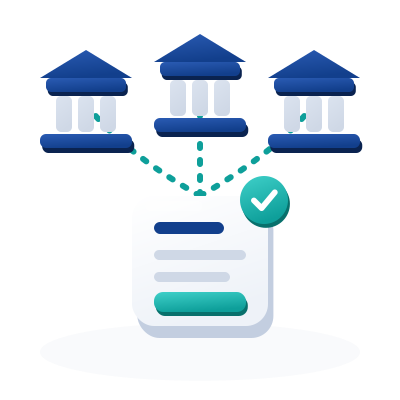
A direct lender is the credit provider itself. It assesses your affordability, signs the credit agreement with you and pays out the money. On this page, Century (CreditZA) and Jabulani Money work this way.
A loan-matching service does not lend. You fill in one form and it shows or forwards your request to partner lenders, so you can reach several of them at once. Creditgenius, Creditomax, FinPug and Dengoo are free for you: they are paid by the lenders.
| Question | Direct lender | Loan-matching service |
|---|
| Who signs the agreement with you? | The lender itself | The partner lender you choose |
| How many offers do you see? | One | Several, from one form |
| Does it cost you anything? | Interest and NCA fees in the quote | The service is free; the lender charges interest and fees |
| Best when | You already know which lender you want | You want to compare several lenders quickly |
Either way, the lender that grants the loan must give you a pre-agreement statement and quotation before you sign, as the National Credit Act requires.
What does a loan cost, and what does the National Credit Act cap?
The price of a loan in South Africa has three parts: interest, a once-off initiation fee and a monthly service fee. Credit life insurance can be added. For short-term credit, which means loans of up to R8 000 repayable within 6 months, the regulations set ceilings on all three:
- Interest: at most 5% a month on the first short-term loan in a calendar year and 3% a month on later ones.
- Initiation fee: R165 plus 10% of the amount above R1 000, never more than R1 050.
- Service fee: at most R60 a month. Lenders usually show it with VAT, as R69.
For larger unsecured loans, the interest ceiling is the Reserve Bank repo rate plus 21% a year. These caps tell you the maximum; your quote tells you the actual price. Creditgenius, for example, publishes R3 000 over 91 days repaid as R3 915 in total, and Century shows the repayable amount for each loan in its calculator.
Our guide What does a short-term loan really cost? works through a full example with every fee.
Can you get a loan with a bad credit record?
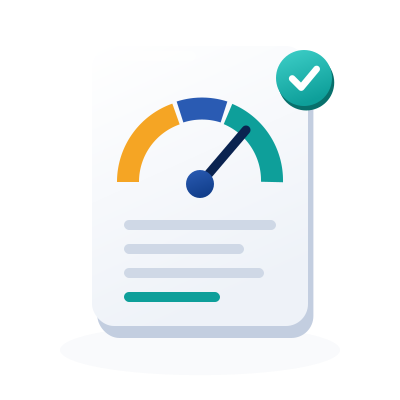
There is no single “blacklist” in South Africa. Credit bureaus such as TransUnion, Experian, XDS and Compuscan keep a record of how you have repaid credit, and lenders read it as part of their affordability assessment. An adverse listing makes approval harder, but it does not have to end the conversation: Creditgenius, for instance, says it looks at your overall situation and that an adverse listing on its own does not automatically rule you out.
Two things do stop a new loan. If you are under debt review, the law does not allow new credit until the process is formally concluded. And every lender must decline if the assessment shows that the repayments would leave you over-indebted.
Responsible borrowing protects your record for next time:
- Check your own credit report: the National Credit Act gives you one free copy from each bureau every 12 months.
- Borrow only what you need, from a provider that shows an NCR registration number or works with registered lenders.
- Plan the repayment before you sign, and never hand over your ID or bank card in exchange for a loan.
- If you cannot pay an instalment, call the lender before the due date.

 CompareCheck the amount, term and published cost example of each service on this page.
 ApplyFill in the form on the provider’s site with your SA ID, payslips or bank statements and a bank account in your name.
 Read the quoteCheck the interest rate, initiation and service fees and the total to repay before you accept.
 Get paid outIf you are approved and sign, the lender pays the money into your account.